
Agriculture + Agritourism
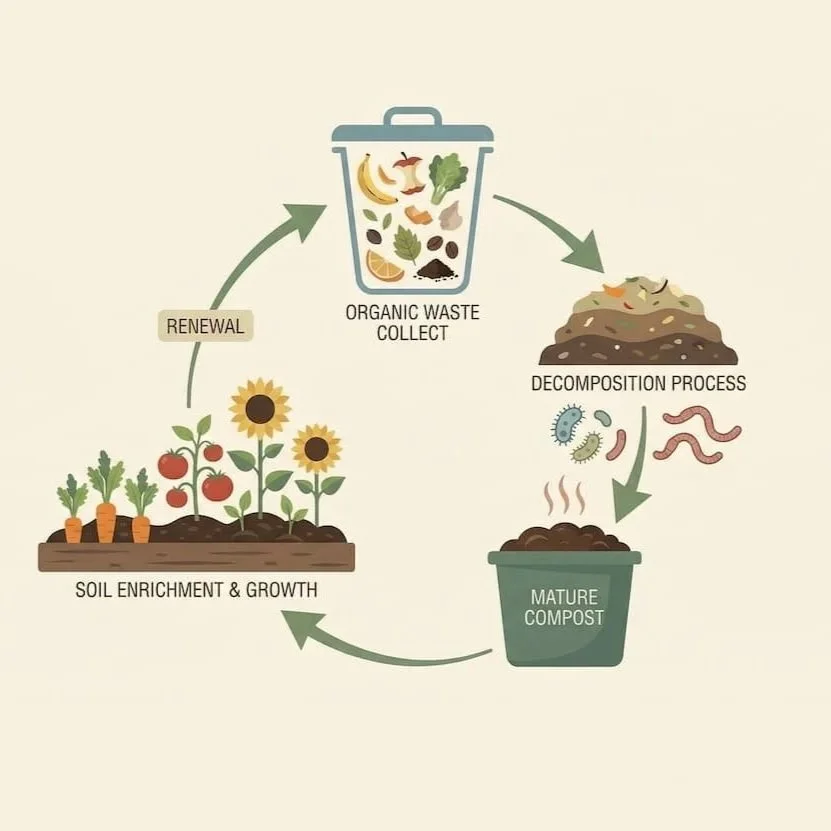
County Enhances Food Compost Effort
November 15, 2024
This month, Montgomery County launched the latest phase of its initiative to reduce food waste by encouraging businesses and residents to compost instead of discarding food scraps in the trash. (See a short video later in this article.)
Food scraps account for about one-quarter of the county's total trash volume. In 2023, the county estimates that approximately 90,000 tons of food waste ended up in the trash, most of which was incinerated at the county's facility in Dickerson.
Composting food scraps is an environmentally beneficial practice (and thus, a no-brainer), but it requires significant changes in behavior for households and businesses, as well as adaptations to the county’s waste management systems. The county has been running a pilot composting program for several years and now plans to increase participation and enhance its infrastructure.
Part of this effort includes allowing residents to “recycle” food scraps at the curbside, just as they do with glass, plastic, paper, and cardboard. The collected scraps would be transported to a central location, likely the Dickerson yard trim compost facility.
Click “Read More” to go to the full article and watch a short YouTube video of the County’s recent ceremony on the composting initiative.

Montgomery County Council Approves Limited Camping in Ag Reserve
Updated August 12, 2024
The Montgomery County Council in late July approved a zoning ordinance that will allow some landowners in the Ag Reserve to host overnight guests in what will essentially be private campgrounds open to the public. The measure goes into affect August 19.
The new ordinance—called Zoning Text Amendment (ZTA) 24-02—was approved by the 11-member Council after eight months of debate that ended in a compromise, scaled-down version of an earlier proposal. That proposal drew broad opposition from farmers and Ag Reserve groups, including SCA.
The measure as passed has the following allowances, limits, and restrictions:
• Campgrounds can be on working farms only. Thus, entrepreneurs thinking about buying land in the Ag Reserve solely to develop a private campground would not be permitted to do so.
• Landowners must submit plans for a private campground to the county for evaluation under “conditional use” rules. That means County officials will evaluate each proposal on its own merits and “conditions” may be imposed depending on the specific needs of the property and neighborhood.
• A property must be at least 25 acres to qualify for a campground.
• A campground can encompass only 10% of a property’s total acreage, or 5 acres, whichever is smaller.
• Campsites don’t have to be clustered in one area. If spread out, however, they still must comply with the 10% or 5-acre limit
• A campground must be 100 feet from any neighboring property line.
• Properties of 25 to 100 acres can have up to 5 sites for tent or RV camping, or temporary removable structures such as yurts or small cabin on wheels.
• Properties larger than 100 acres can have up to 10 such sites, of which only 5 can be for RV camping.
• No tents, RVs, or removable structures are permitted in a stream buffer or floodplain, and cutting down trees to create a campground is prohibited.
• Temporary removable structures cannot be larger than 200 square feet.
• Such structures cannot have heating or air conditioning systems, kitchens or bathrooms. RVs can have such amenities.
• Property owners are not required to provide separate bathrooms, bathing facilities, or cooking facilities. If they do, those facilities must meet existing county codes, including those for septic systems, and be approved by county authorities.
• Guests can stay a maximum of 3 nights only.
Our Unfolding Food Emergency
January 3, 2024
This article is excerpted from the Autumn Harvest Season 2023 issue of Plenty Magazine. We present the initial portion of the article. You may then link to Plenty’s website to read the remainder of the piece, and see the charts and photos that accompany it.
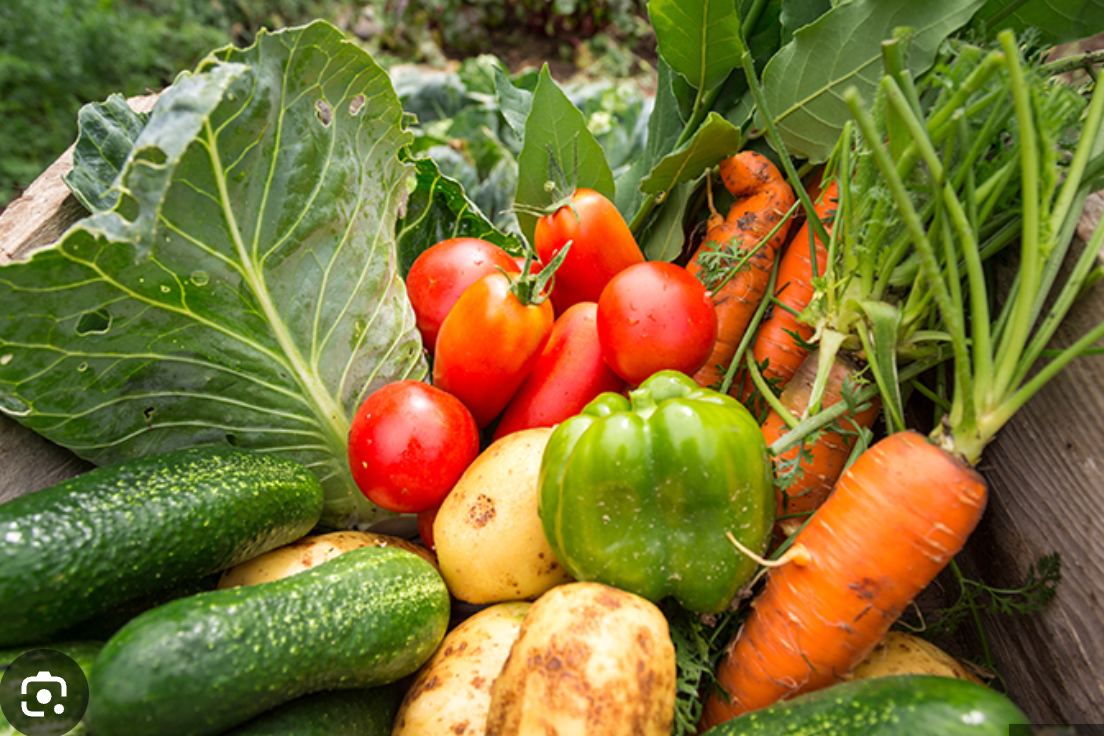
The Montgomery County Council was uniquely visionary in 1980 when it protected 90,000 acres, nearly one-third of the county, for agricultural purposes. Now is the time to create more opportunities in the Agricultural Reserve for robust food production.
Stepping into a supermarket in 2020 or 2021 was a surreal experience—and wearing masks was only one reason. Empty shelves glared out at us. Where were the neatly shrink-wrapped packages of chicken? Why were there no eggs to be had? Peanut butter was in short supply, as were coffee and milk. There were many factors behind these shortages, but according to the Center for Strategic Studies, “The U.S. Food supply chain is highly efficient with low levels of redundancy, meaning that a small disruption in one part of the system can have cascading effects and cause food shipments to be delayed by days or weeks.”

Going Underground
December 18, 2023
By Ellen Gordon
“We know more about the movement of celestial bodies than about the soil underfoot.” —Leonardo Da Vinci
This article is excerpted from the Spring 2024 issue of Plenty Magazine. We present the initial portion of the article. You may then link to Plenty’s website to read the remainder of the piece, and see the charts and photos that accompany it.
Stand outside during the tail end of winter and the local landscape is quiet, a palette of soft grays and browns—dormant-seeming, except for the scurrying of squirrels or a line of honking geese overhead. Deciduous trees are largely bare, apart from oaks and beeches, whose dead leaves cling to them for most of winter—a strategy dubbed marcescence—but that’s another story. No new sprigs of green, no burst of floral colors. By early March, many of us are desperate for spring, overflowing with signs of its rebirth.
But just below our feet lies an entire world whose activity barely shows all winter, a vital realm brimming with as much life, if not more, than we can see in plain sight. In reality, there are more living organisms in the soil than all the other life forms above ground! When we aren’t disrupting their work, the nourishment they help liberate is ready the moment the soil warms enough to activate growth in plants and to awaken seeds. In fact, “Soil is alive. Much more than a prop to hold up your plants, healthy soil is a jungle of voracious creatures eating and pooping and reproducing their way toward glorious soil fertility,” says Kathy Merrifield, a retired Oregon State University scientist.
Supporting Regenerative Agriculture
February 22, 2023
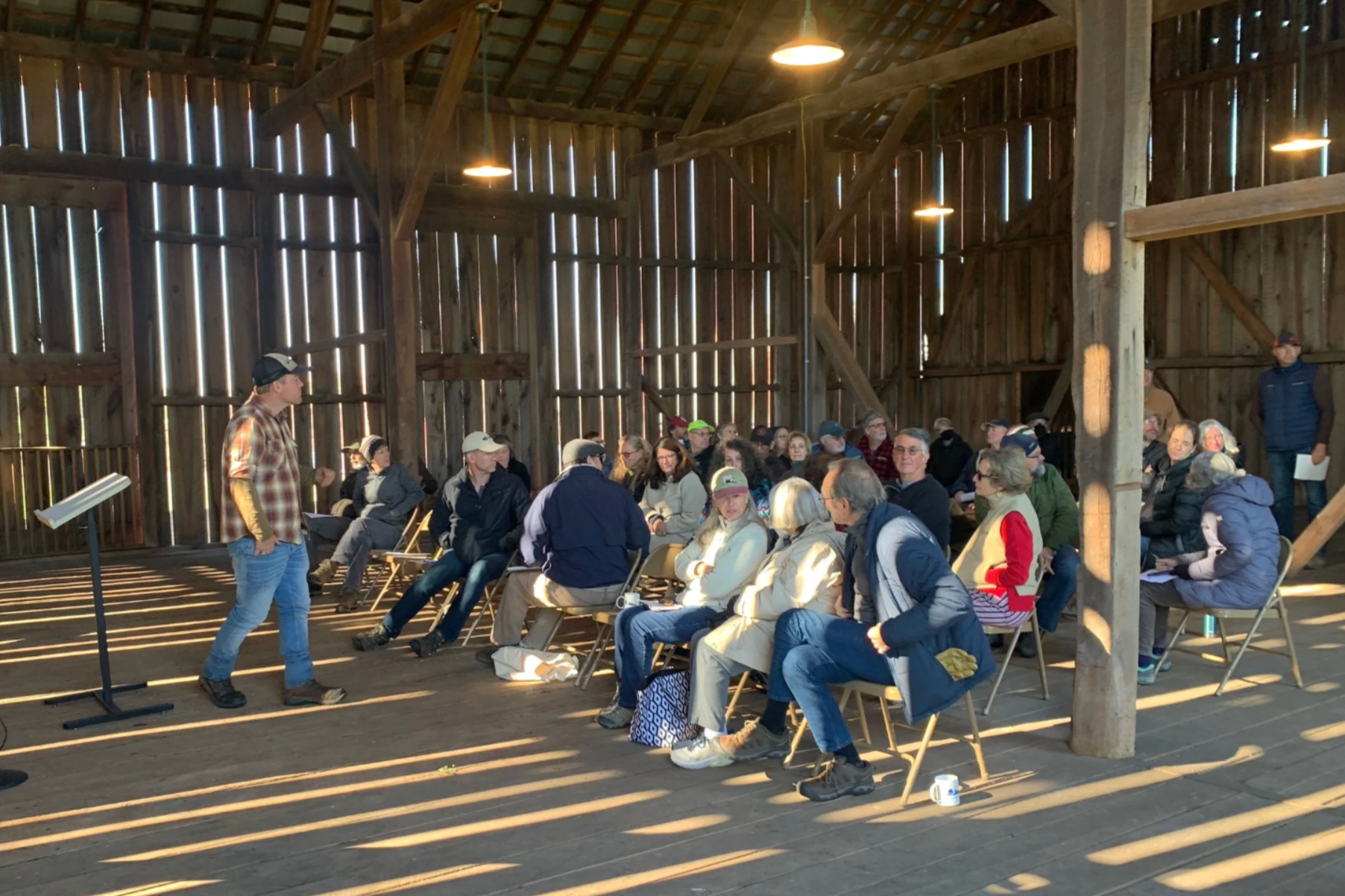
SCA is a strong advocate for regenerative agriculture (regen ag). What is that? It’s an umbrella term referring to an array of agricultural management and production practices that aim to: improve soil; sustain arable farmland; sequester carbon; increase biodiversity; provide healthy forage for farm animals; reduce the use of agricultural chemicals; and promote the growth of high-quality food.
Regen ag can also help increase food security and climate resiliency amid the challenges of climate change. Changing weather patterns and extreme weather events are expected to put many food-growing areas in the U.S. at risk. Improved soils hold water better, in flood and drought. Increasing the amount of food grown locally will help ensure adequate crop growth and food supply. And it will protect against supply chain disruptions, such as those the occurred during the pandemic. Regen ag can also increase the sequestration of carbon in soils.
Testing Agrivoltaics in the Ag Reserve
January 5, 2023
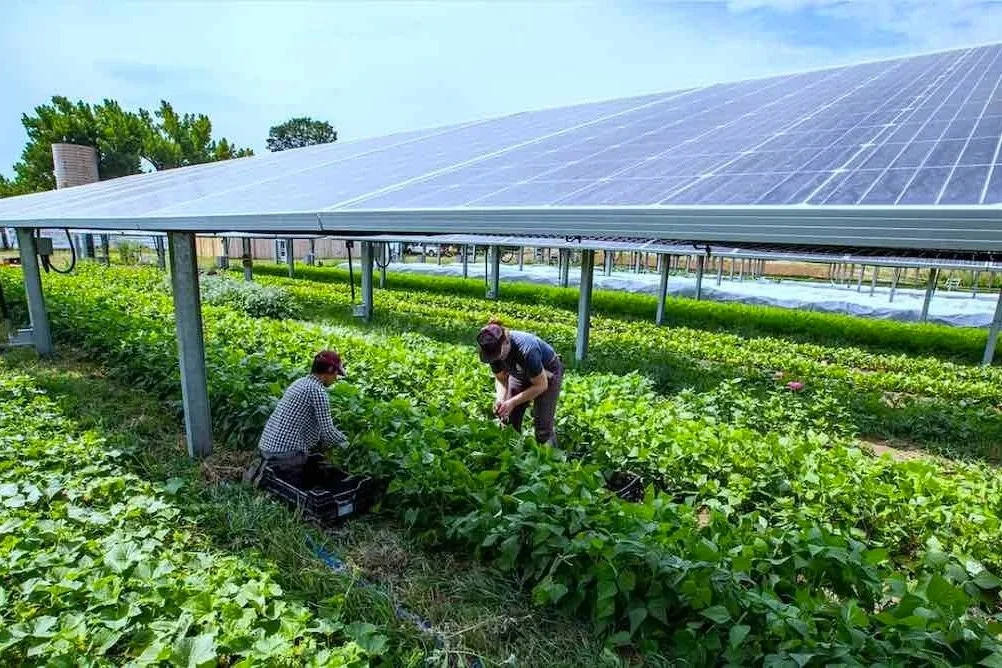
“Agrivoltaics,” is a new buzzword in solar energy circles. The term applies to land used for agriculture (“agri”) and for generating solar energy (“voltaics”) by solar panels. Agrivoltaics can refer to just a few solar panels mounted on ground-based structures (as opposed to rooftops) or a whole field of them, with crops or animals grazing underneath.
A successful agrivoltaic project has some type of farming thriving adjacent to or under the panels, with the panels generating sufficient power to justify the economics of constructing and installing them. That can be a tall order—but not an impossible one. Agrivoltaics projects are very much in the research phase. The approach is not a fully proven yet, though it’s being viewed as workable under the right circumstances. For now, much of what’s known about agrivoltaics has come from research in dry areas in the western U.S. Some of these areas are sunnier and hotter than the Mid-Atlantic region in the summer and colder in the winter. Thus, agrivoltaic projects that are successful out west aren’t necessarily relevant to the Mid-Atlantic.
Other concerns and potential downsides are emerging. Ground solar panels can disturb and compact soil. They also decrease the amount of sun that reaches plants, affecting photosynthesis. And ground panels can adversely affect how much rain reaches plants and in what pattern. For example, run-off from panels can cause water to pool in some areas. Another practical concern is how farmers get equipment in and around ground panels. All these issues, and others, are being studied.
Agrivoltaic proposals for the Ag Reserve
In 2020, Montgomery County adopted a zoning change that allowed solar arrays on land zoned for agriculture in Montgomery’s County’s Ag Reserve. The measure was a compromise. It recognized the need to generate more renewable energy in the county while at the same time preserving farming, especially on the county’s best soils. The measure also encouraged more production of rooftop solar. It increased the allowable amount of solar production for landowners from 120% of their personal use to 200%. That meant people could sell any excess solar electricity they generated back into the electricity grid. Community solar arrays, which are smaller than “utility scale” arrays, are also allowed under the measure. They can produce up to 2 megawatts of electricity, and generally require 10 to 12 acres of land. Importantly, placing solar arrays on farming soils designated class 1 or class 2 (high quality soils) is prohibited.
Our Position on Agritourism
November 17, 2025
The following statement was issued the week of November 10, 2025 by four organizations who are involved in protecting and preserving the Ag Reserve, including SCA. Please feel free to distribute it. And please consider commenting on it in the section below.
Position Statement PDF
Centering Agriculture in Agritourism: A Joint Position Statement on Agritourism
11/3/2025
Montgomery County Farm Bureau, Montgomery Agricultural Producers
Montgomery Countryside Alliance and Sugarloaf Citizens Association
In 1980, Montgomery County enacted a visionary solution to stem the loss of farms and farmland. It created the Agricultural Reserve, which has been lauded as the nation’s most innovative and successful farmland protection effort. Montgomery County has reaped the benefits of this initiative every day. The Ag Reserve has preserved farms and farming opportunities; it enables local food and grain production; it protects water and air quality for the region; and it provides an array of outdoor recreational opportunities for the entire County. The farms of the Ag Reserve contribute $281 million annually and support over 10,000 jobs in the County.
Maryland lost an average of 2,400 acres of farmland each year between 2017 and 2022. Montgomery County’s land use policies have helped stem the loss of producing farms here, but maintaining thriving farms requires care.
The Ag Reserve remains one of the County’s best ideas – an achievement many other jurisdictions envy. The fundamental purpose of the Reserve—to protect thriving farms—will be strengthened through enhanced connections between producing farms and residents in the County’s urban and suburban areas.
Agricultural tourism is thriving in the Ag Reserve. Many farmers are enhancing revenue by building new markets for their farm products. For decades, thousands of visitors have flocked to Ag Reserve farms to shop at farm stores, for “pick your own” produce, harvest festivals, wineries, breweries, cideries, corn mazes, educational farm tours, animal visits, farm-to-table dinners, and equestrian events. Agritourism connects consumers with local farms not only for purchasing local products but also to build greater understanding about how food is produced and why it is important to support a strong local food system.
A Fragile Balance
Why then is the subject of agritourism becoming somewhat controversial? It’s simple: Some landowners (or land speculators) seek to profit from land planned and zoned as protected farmland by introducing commercial activities that are not associated with farming. Land in the Reserve has been zoned to ensure that it will remain reasonably affordable for farmers to lease or purchase. Business investors who are not farmers, if allowed to divert land from the primary use of farming, will attract other land investors with non-farming ideas. Providing for non-agricultural commercial uses of the Reserve is already driving up the cost of land for bona fide farmers, including, importantly, next 2 generation producers. Promoting competition for land from distinctly non-agricultural commercial uses does not support the Ag Reserve and the local agricultural economy. Rather, it undermines it.