
Conservation, Land Use + Zoning

Welcome to the new Royce Hanson Conservation Park in Dickerson
October 14, 2025
Kudos to Montgomery County, the Montgomery County Parks Foundation, and an advocacy group of County residents for creating the Royce Hanson Conservation Park at Broad Run.
This new 475-acre park at 21765 Club Hollow Road in Dickerson will celebrate farming and the Ag Reserve—through educational programs, interpretation of the area’s rich agricultural history, and the enjoyment of nature.
With trails and recreational opportunities for hikers, cyclists, and equestrians, there’s something for everyone.
Most important, the new park celebrates Dr. Royce Hanson—a true visionary—and the County policymakers that worked with him to create the Ag Reserve in 1980.
Born in Depression-era Oklahoma, Dr. Hanson grew up to become an academic, a public servant, author, urban planner, conservationist, and advocate for farming, wilderness, and outdoor recreation. He served two terms as Chairman of the Montgomery County Planning Board, first from 1972 to 1981, and again from 2006 to 2010. From 2009 to 2022, Dr. Hanson served on the Board of the Montgomery County Parks Foundation.
Thanks to his and the County’s commitment, the Ag Reserve—comprising a third of the county—has become a national model of agricultural preservation in a densely populated area.
The Montgomery Parks Foundation has launched a $100,000 fundraising campaign to enhance the park’s facilities and educational programming. You can donate via the Foundation’s website.

Power Line Project is a Bad Idea
December 5, 2024
A proposed high-energy power line extending 70 miles from the Baltimore area to Adamstown would threaten an estimated 4,000 acres of farmland, forests and wildlife habitats. It would also require permanent easements on dozens of farms and private properties to site hundreds of 140-foot-tall transmission towers.
SCA joins the Baltimore, Carroll and Frederick County governments, the Maryland Farm Bureau, Preservation Maryland, the Chesapeake Bay Foundation, and a host of regional environmental in opposition to the project. Maryland Gov. Wes Moore said in late November he had “grave concerns” about the project but has not yet opposed it.
We urge you to learn more online and at StopMPRP.com. MPRP stands for Maryland Piedmont Reliability Project.
Power lines are, of course, a necessary fixture of modern life. When they are justified, we support them and live with the eyesore. But the necessity of this one has been widely questioned. It will mainly provide power to the burgeoning data center industry in Virginia, and not Maryland homes and businesses. But Marylanders will help pay the estimated $424 million cost of the project.
The project also relies on outdated infrastructure. Experts consulted by StopMPRP say more sustainable and efficient alternatives are available.
There are larger issues at play, too. Maryland lacks a coherent long-term energy strategy that takes the environment, the well-being of residents, and climate change into consideration—even as demand for energy is expected to rise sharply over the next decade.
Protecting the Sugarloaf Mountain Area
Updated January 6, 2024
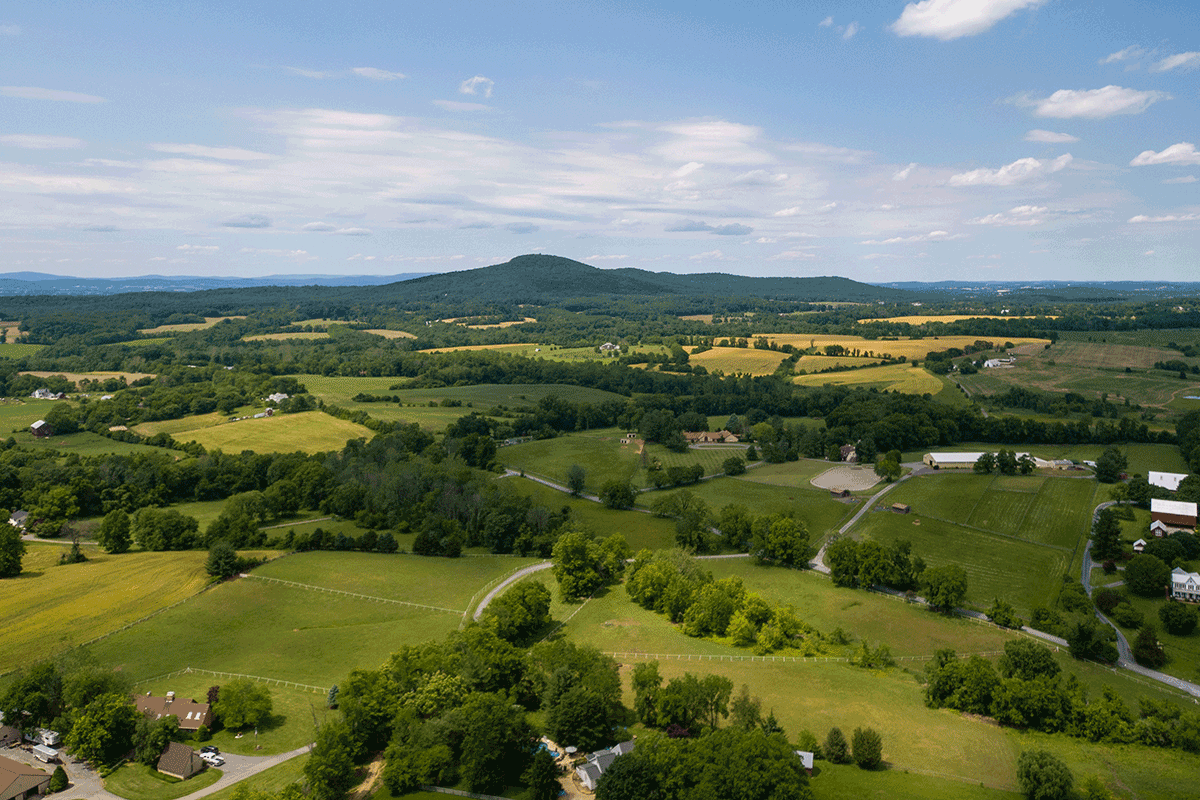
On December 19, 2023, the Frederick County Council voted down a once-in-a-generation proposal to strengthen conservation and agricultural zoning on 19,700 acres in the southern part of the county.
The area in question in Frederick County is contiguous with Montgomery County’s Ag Reserve. It encompasses 3,400-acre Sugarloaf Mountain and an additional 16,300 acres to the east of the mountain all the way to I-270.
The vote came after a three-year process, which saw the Frederick County Council approve a comprehensive land-use plan—the Sugarloaf Mountain Treasured Landscape Management Plan—for the area in the fall of 2022. The Council struggled, however, to come to political consensus and agreement in 2022 and again in 2023 on an accompanying zoning ordinance—called an “overlay”—that would implement and enforce the plan’s land-use guidance.
That struggle occurred despite urging by Frederick County’s own planning commission and the Maryland’s Department of the Environment to approve the overlay.
In a nutshell, the debate pitted environmental and civic groups (including SCA) against developers, real estate interests, and business groups. The latter prevailed in a county long bent on loosely regulated growth.
The practical upshot is that the area’s existing zoning stays in place, with no updated conservation protections for natural resources, streams, trees or natural habitat— amid the known and unknown threats posed by climate change.
Importantly, that existing zoning largely prevents commercial and dense housing development without explicit permission from Frederick County authorities. But the failure of the Frederick County Council to enact the overlay opens up a path for developers and landowners to apply for zoning exemptions on a case-by-case basis.
SCA is 2023 Recipient of Royce Hanson Award
October 10, 2023
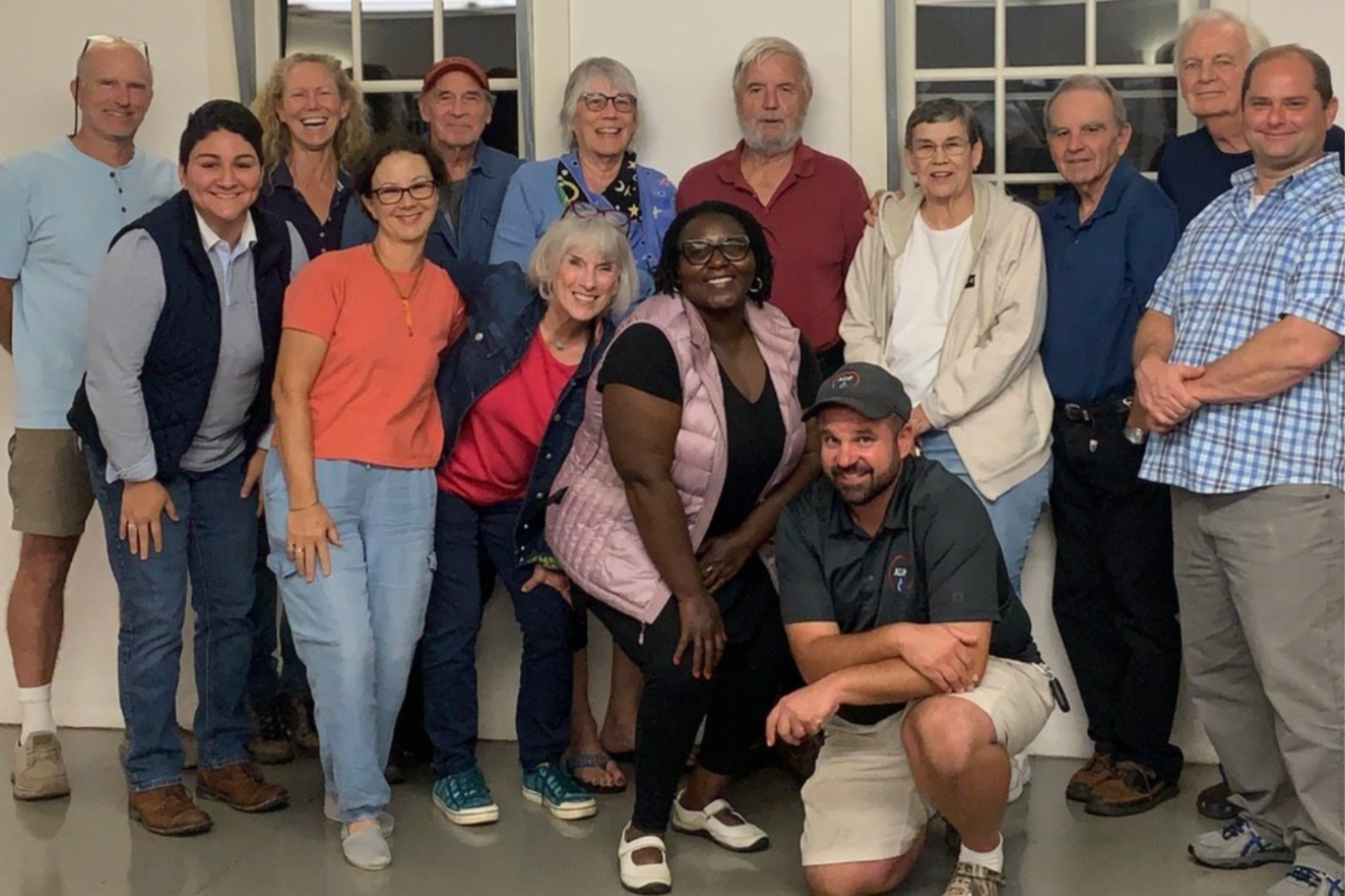
Great News! SCA is this year’s recipient of the Royce Hanson award. The award is given each year by Montgomery Countryside Alliance (MCA) “in recognition of outstanding commitment toward the protection of Montgomery County’s Agricultural Reserve.”
The award is named for its first recipient, Dr. Royce Hanson, former Chair of the Montgomery County Planning Commission and original architect of the Ag Reserve. You can view past winners, since 2005, here.
In its write-up on this year’s award, MCA said of SCA:
“Tenacious, and scrappy when needed, SCA is on the frontlines when ill-conceived land use proposals surface. But they are also forward thinking about the need to promote the Reserve’s role in climate change and food system resiliency. Their headquarters, Linden Farm in Dickerson, serves dual roles as community event/meeting space and home to an important regenerative farming pilot. No doubt that the Reserve’s future vibrancy will rely on the continued work of SCA and their resourceful and dedicated members.”
County Council Approves 18-month Pause on Data Centers
Updated July 29, 2026
The Montgomery County Council on July 28 unanimously approved an 18-month moratorium on large-scale data centers.
None can be approved, and no applications for data centers can be processed during the moratorium and before the County develops zoning rules regulating them.
The measure encompasses the proposal by a company called Atmosphere to build a 110-acre, 5-building data center campus in Dickerson.
The Council also adopted a definition of “large-scale” or “hyperscale” data centers to clarify the kind of facility it seeks to stop for now.
The 18-month pause is intended to allow the Council and other County officials to thoroughly evaluate the risks posed by large data centers, and to draft regulations that will specify where they can be built and what rules they have to abide by.
There’s tension in that space already. Atmosphere released an updated plan and analysis of its proposal on July 20. The company is saying it will likely be unable to meet certain desires and requests from County lawmakers and advocacy groups. And the company’s CEO, Chuck McBride, told media outlets he was “disappointed” in the Council’s approval of the moratorium.
“Throughout this process, we worked collaboratively with the Council and other stakeholders to demonstrate that the Dickerson Data Center Campus is a unique redevelopment opportunity and to develop what we believe would be one of the most sustainable data center campuses possible,” McBride told The Banner.
The company had filed an appeal against a previous 6-month administrative moratorium imposed by County Executive Marc Elrich, asserting he had overstepped his authority. A similar suit against the Council’s measure would almost certainly be unsuccessful. Notably, the company has threatened numerous times since January to abandon the project if a moratorium was imposed.
Per the company’s July 20 project analysis, some County officials and advocacy groups would like to see aggressive efforts to use cleaner renewable energy to power the proposed facility. The company is asserting, however, that the mix of power sources for the Dickerson data center will not be able to meet “unrealistic” renewable energy goals—due to restraints inherent in the power grid in the mid-Atlantic area.
Issues around water use (from the Potomac River), noise, the role of the facility’s diesel generators, taxation, and other challenges also need addressing. The company claims it is striving to achieve “best practices” in these areas. But no independent assessment of its plans has yet been done.
The moratorium is a clear victory for County residents’ advocacy. On June 16, some 80 people testified at a public hearing on the issue; the vast majority supported a moratorium. Hundreds of other citizens have submitted written comments in recent months, also overwhelmingly supporting a moratorium.
Montgomery County, with this action, becomes the latest jurisdiction in Maryland and nationally to place pauses on data centers approvals.
The reasons are now quite straightforward: lawmakers and citizens alike are just beginning to understand this complex technology and its significant scope and potential impact (positive and negative) on communities.
Many jurisdictions, including Montgomery County, now realize they must involve independent experts to help assess data center proposals.
The 18-month pause means that the present Council and the next Council—as well as a new County Executive—will be dealing with this issue.
Both the new Council and County Executive assume office at noon on Monday, December 7. Importantly, re-elected Councilmember Marilyn Balcombe will be Council President in 2027 and provide an important bridge and leadership on data centers. She has been the lead person to date drafting the data center zoning ordinance.