Resources
This page is a growing directory of resources. Here you can find links, key documents (reports, master plans, and fact sheets) and videos. Please let us know if you would like your organization to be added to our list.
Organizations
Plenty Magazine
Plenty is an award-winning print and digital magazine about all that awaits you to explore, savor and enjoy in Montgomery County’s 93,000-acre Agricultural Reserve and beyond.
Conservation Montgomery
Conservation Montgomery is a coalition of civic and environmental organizations, and individual residents, who address Montgomery County’s environmental and quality-of-life challenges.
Friends of Ten Mile Creek
The Friends of Ten Mile Creek and Little Seneca Reservoir serve as guardians of Ten Mile Creek and its watershed, preserving and protecting this unique place.
Community Farm Share
Community Farm Share makes it possible for community members to help provide a family experiencing food insecurity with a weekly bag of diverse, nutritious fruit and vegetables from a local, small scale produce farm from the spring to fall growing season.
Reports/Documents
Testimony on HB 166
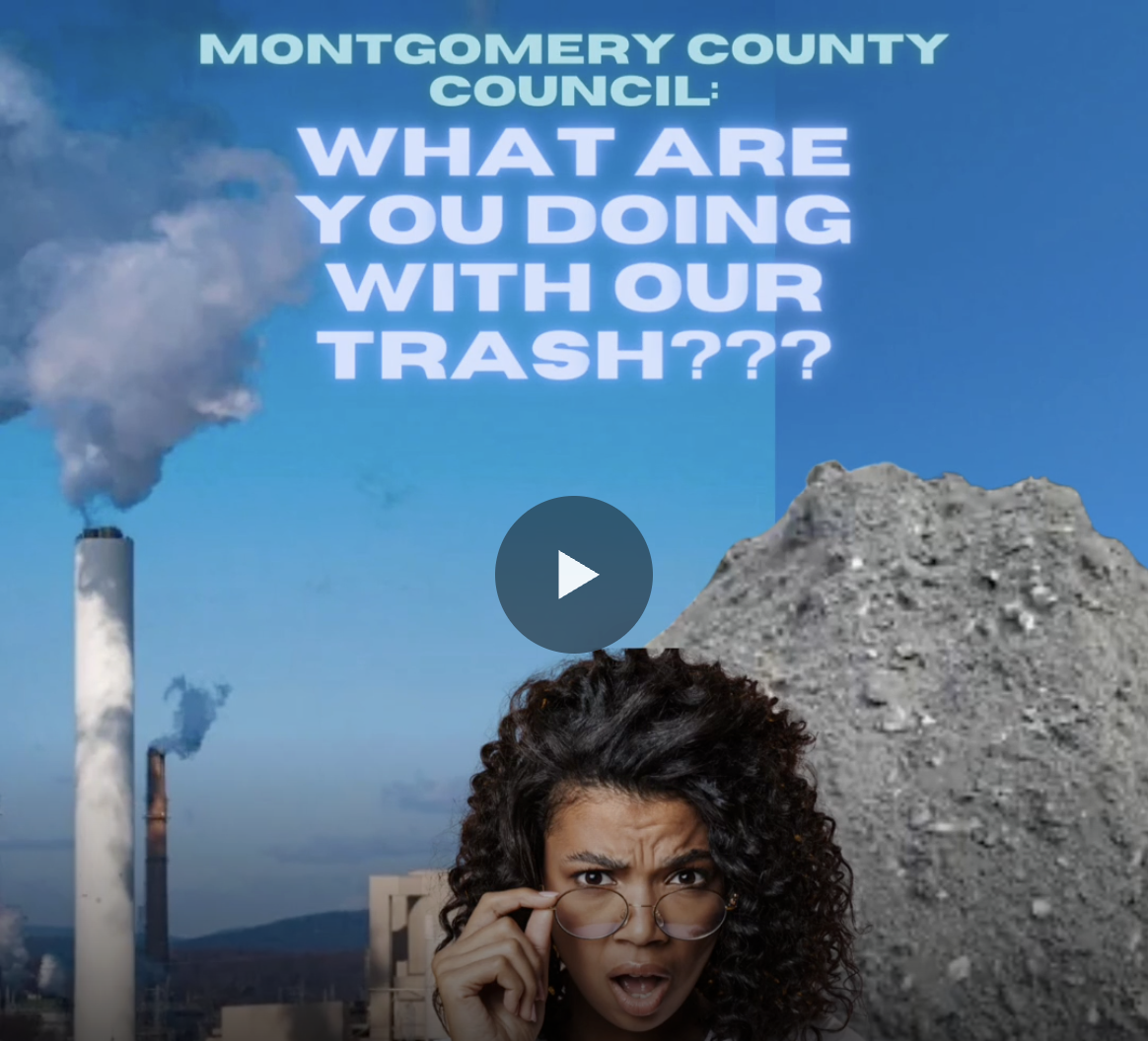
In order to achieve our greenhouse gas emission goals here in Montgomery County and throughout the state of Maryland we must put all our subsidy dollars toward truly clean energy. These must be industries that produce no greenhouse gases. According to the EPA, the Montgomery County RRF puts approximately 600,000 tons of greenhouse gas (CO2e) in the air annually. This is more than double what Covanta reports in their PR materials because they discount all the GHG’s that come from anything organic (food scraps, paper, wood, leather etc). They claim it will regrow so somehow those GHG’s don’t matter.
Actual Montgomery County Master Plan (1980)
This Plan focuses on the preservation of farmland but it also tries to establish a policy framework that will contribute to the continuation of farming in the County. Local government can control the quantity of land designated for farmland preservation, given its policy power and overall growth policies.
Preservation of Agricultural and Rural Open Space Functional Master Plan
In the late 1950s, agricultural and open space preservation arose as a social and economic issue. The loss of agricultural and open space land, as a metropolitan planning issue, was expressed in terms of metropolitan needs and problems — the need to preserve open space and the diseconomy in building the costly infrastructure to serve scattered suburban development.
Beyond Incineration
This report documents what decision makers and the public need to know about the options for managing our discarded materials. A recent series of reports prepared by HDR Consultants, as well as a draft of the county’s Ten-Year Solid Waste Management Plan currently under review, neglect to examine the full negative impacts of continuing to use the county’s trash incinerator. Nor did either provide a robust visionary analysis of all the potential solutions existing today for the county to pursue. This report provides detailed analysis of the negative impacts of incineration to lay bare the reasons why we must stop using this method of waste management and how to pivot to more sustainable solutions.