
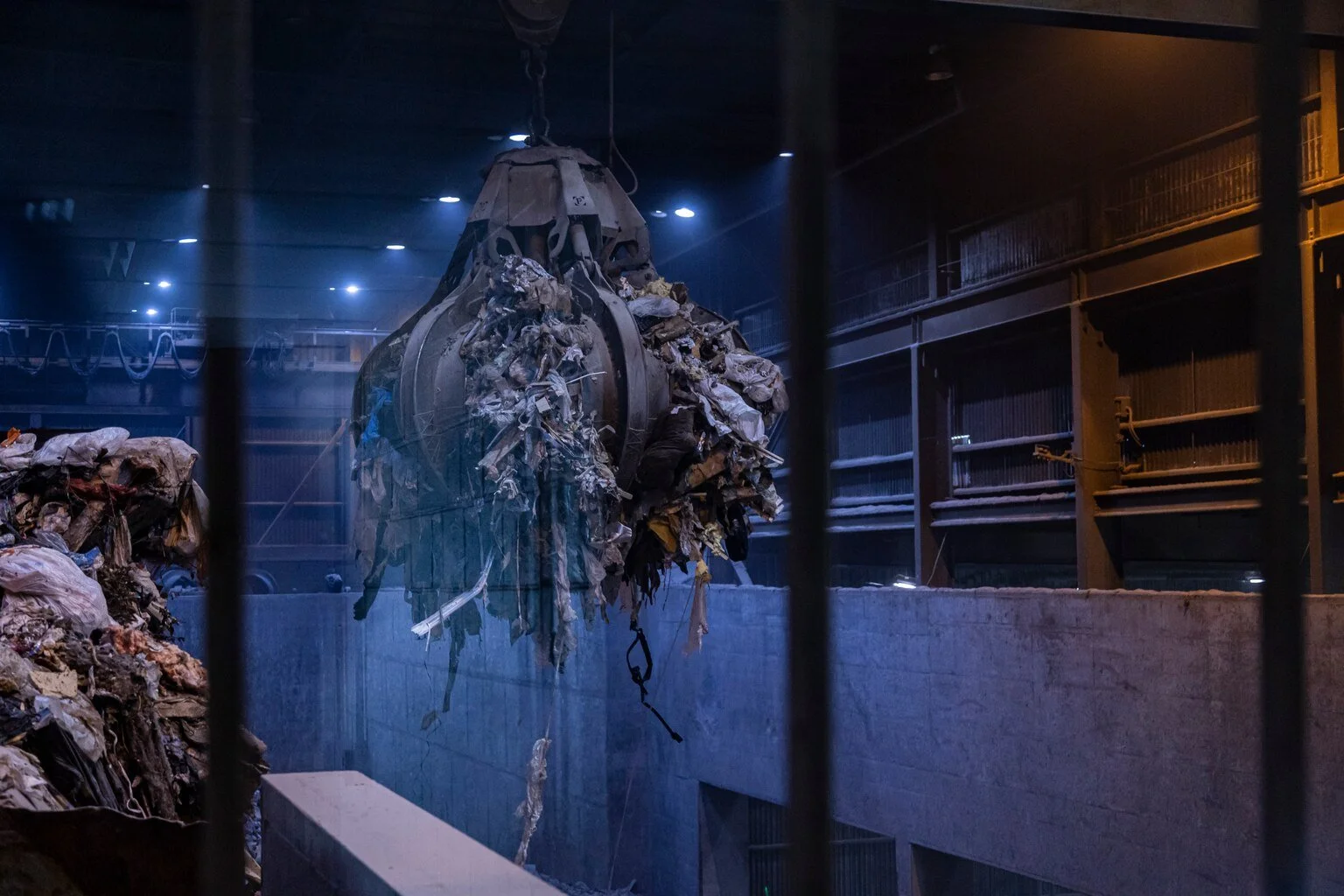
County Deliberates on Trash Overhaul Plans in Advance of Fall Meetings
Updated September 3, 2026
The Montgomery County Council on July 28 held a two-hour meeting on plans to overhaul the way the County disposes of its trash.
The session was the first in a series that could result in a decision in October or November on whether to close the County’s aging trash incinerator in 2027 and pivot to trucking the County’s non-recyclable trash to landfills—as the vast majority of cities and counties in the U.S. do.
The County Executive, Marc Elrich, proposed such a plan earlier this year—after two years of study and analysis by the County’s Department of Environmental Protection (DEP). But Council President Natali Fani-Gonzalez put that plan on hold; she alleged that it was incomplete and raised too many questions that had not yet been answered. She called for more “independent” information and posed dozens of questions to DEP.
On August 19, Elrich sent the Council President and all Council members a detailed response to their questions, formulated by the County’s Department of Environmental Protection (DEP) and Executive Branch. Here’s a link to that document. Warning: it’s a 140-page PDF. However, the heart of the document is in the first 40 pages. Beyond that are support documents and appendices.
For anyone following this issue closely, the document is critical. It will likely form the basis for the Council’s discussions this fall.
SCA strongly supports the main thrust of DEP’s and Mr. Elrich’s plans to make the transition to truck hauling, landfill, and shuttering the Dickerson incinerator. Moreover, we believe DEP has addressed most of the key issues in play in the document we link to above.
At the same time, we appreciate that the Council’s dialogue on this complex issue—with a once-in-a-generation decision to be made—has surfaced issues that Council members need to understand more fully.
Two big problems have occurred as this debate has played out over the past year:
A series of studies commissioned by or done by DEP have presented some conflicting information on the pros and cons of burning vs burying trash, and
Ms. Fani-Gonzalez (intentionally or unintentionally) undercut faith in DEP as a reliable source of information on the proposed waste management transition.
Earlier this year, she asked Council staff to take a fresh look at the research and the DEP plan.
On July 28, staff presented their perspective. A written version of that was made available prior to the session. SCA combed through the document and wrote a four-page memo responding to its content. Click below to read the memo.
SCA MEMO TO COUNCIL
The Council’s next meetings on this issue will be in September. And Council President Fani-Gonzalez has now committed to multiple sessions. However, it is still not clear that the Council can and will actually reach a decision in late October and or early November. Some Council members have said they are committed to that goal so that the current Council will be the one making the decision and not the next Council, which takes office on Dec 7 (along with a new County Executive) after this year’s elections.
Other Council members have not as yet committed to making the waste overhaul decision by November.
Our concern is this: If the decision is not forthcoming and steps put in motion, DEP will be compelled to seek new Requests for Proposals (RFPs) from trash vendors and renegotiate contracts. That would almost certainly cost more money and cause delays that could go well into 2027, stalling efforts once again to get this major county responsibility resolved. (Also, the County must give Reworld, the private company that operates the incinerator, six-month’s notice that the facility is to be shut down.)
Read More