Posts tagged spotlight
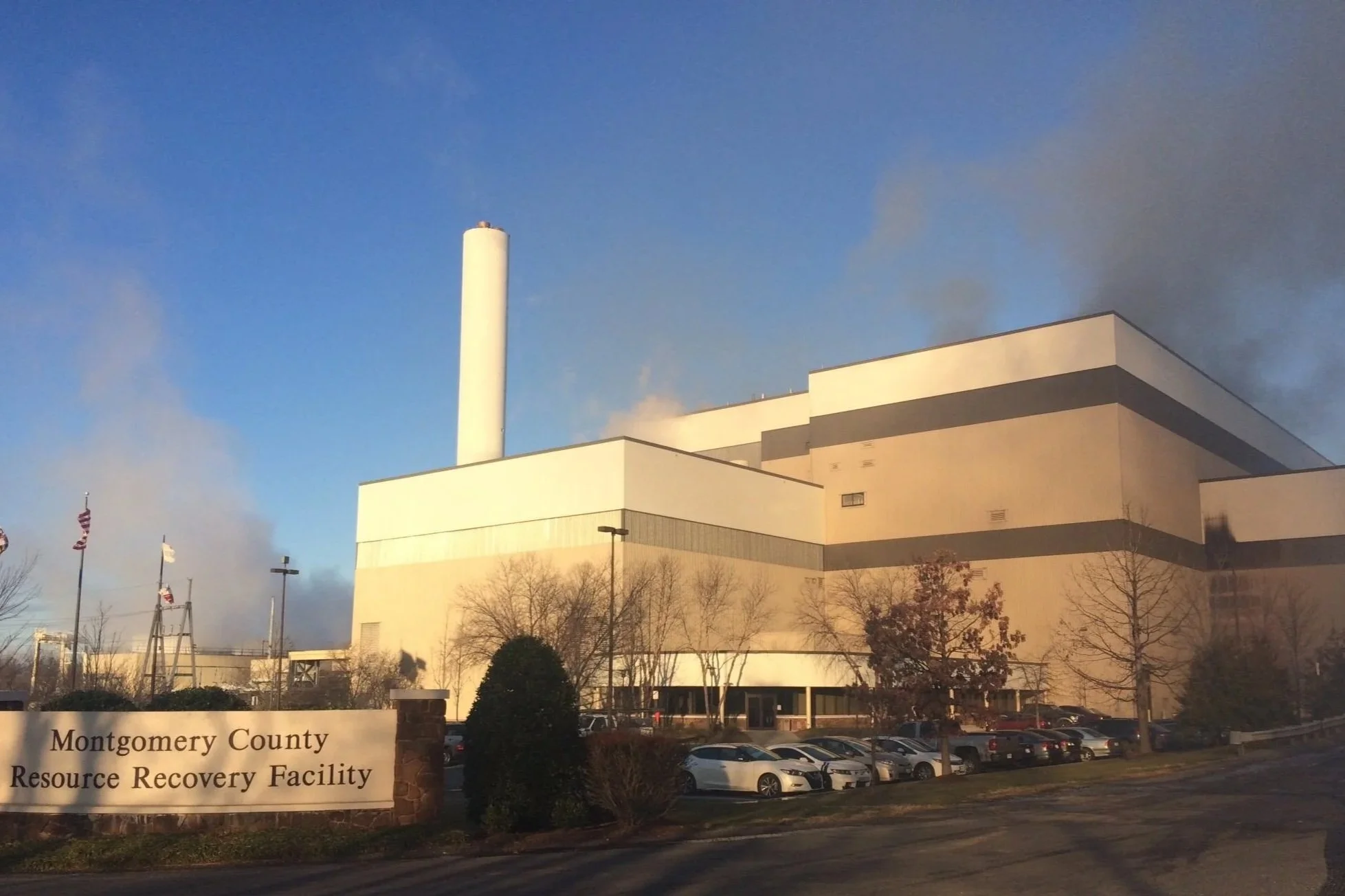
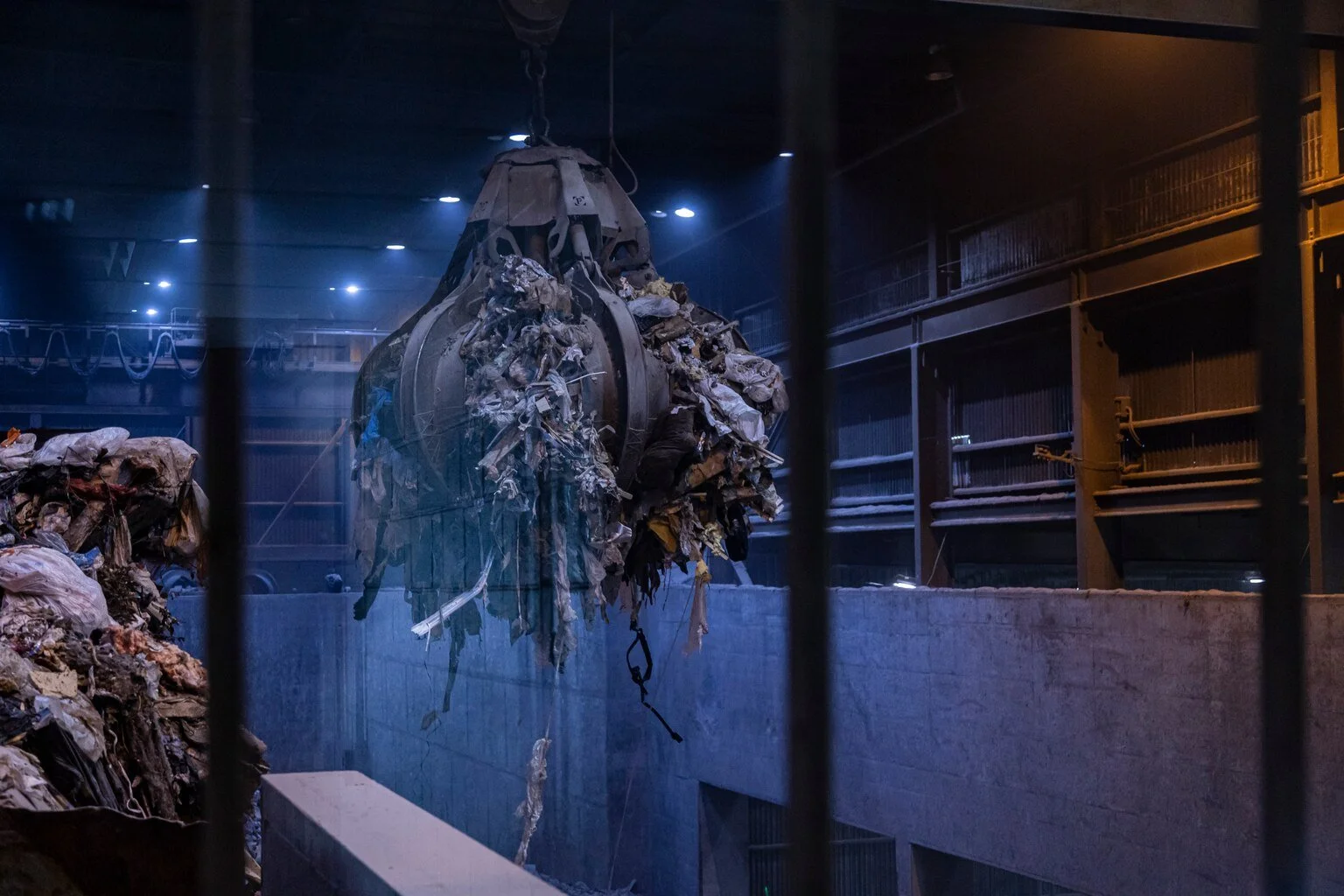
County Council Continues Deliberations on the Future of the Dickerson Incinerator

County Deliberates on Trash Overhaul Plans in Advance of Fall Meetings

Updated September 3, 2026

The Montgomery County Council on July 28 held a two-hour meeting on plans to overhaul the way the County disposes of its trash.

The session was the first in a series that could result in a decision in October or November on whether to close the County’s aging trash incinerator in 2027 and pivot to trucking the County’s non-recyclable trash to landfills—as the vast majority of cities and counties in the U.S. do.

The County Executive, Marc Elrich, proposed such a plan earlier this year—after two years of study and analysis by the County’s Department of Environmental Protection (DEP). But Council President Natali Fani-Gonzalez put that plan on hold; she alleged that it was incomplete and raised too many questions that had not yet been answered. She called for more “independent” information and posed dozens of questions to DEP.

On August 19, Elrich sent the Council President and all Council members a detailed response to their questions, formulated by the County’s Department of Environmental Protection (DEP) and Executive Branch. Here’s a link to that document. Warning: it’s a 140-page PDF. However, the heart of the document is in the first 40 pages. Beyond that are support documents and appendices.

For anyone following this issue closely, the document is critical. It will likely form the basis for the Council’s discussions this fall.

SCA strongly supports the main thrust of DEP’s and Mr. Elrich’s plans to make the transition to truck hauling, landfill, and shuttering the Dickerson incinerator. Moreover, we believe DEP has addressed most of the key issues in play in the document we link to above.

At the same time, we appreciate that the Council’s dialogue on this complex issue—with a once-in-a-generation decision to be made—has surfaced issues that Council members need to understand more fully.

Two big problems have occurred as this debate has played out over the past year:

  • A series of studies commissioned by or done by DEP have presented some conflicting information on the pros and cons of burning vs burying trash, and

  • Ms. Fani-Gonzalez (intentionally or unintentionally) undercut faith in DEP as a reliable source of information on the proposed waste management transition.

Earlier this year, she asked Council staff to take a fresh look at the research and the DEP plan.

On July 28, staff presented their perspective. A written version of that was made available prior to the session. SCA combed through the document and wrote a four-page memo responding to its content. Click below to read the memo.

SCA MEMO TO COUNCIL

The Council’s next meetings on this issue will be in September. And Council President Fani-Gonzalez has now committed to multiple sessions. However, it is still not clear that the Council can and will actually reach a decision in late October and or early November. Some Council members have said they are committed to that goal so that the current Council will be the one making the decision and not the next Council, which takes office on Dec 7 (along with a new County Executive) after this year’s elections.

Other Council members have not as yet committed to making the waste overhaul decision by November.

Our concern is this: If the decision is not forthcoming and steps put in motion, DEP will be compelled to seek new Requests for Proposals (RFPs) from trash vendors and renegotiate contracts. That would almost certainly cost more money and cause delays that could go well into 2027, stalling efforts once again to get this major county responsibility resolved. (Also, the County must give Reworld, the private company that operates the incinerator, six-month’s notice that the facility is to be shut down.)

Read More
County Council Approves 18-month Pause on Data Centers

County Council Approves 18-month Pause on Data Centers

Updated July 29, 2026

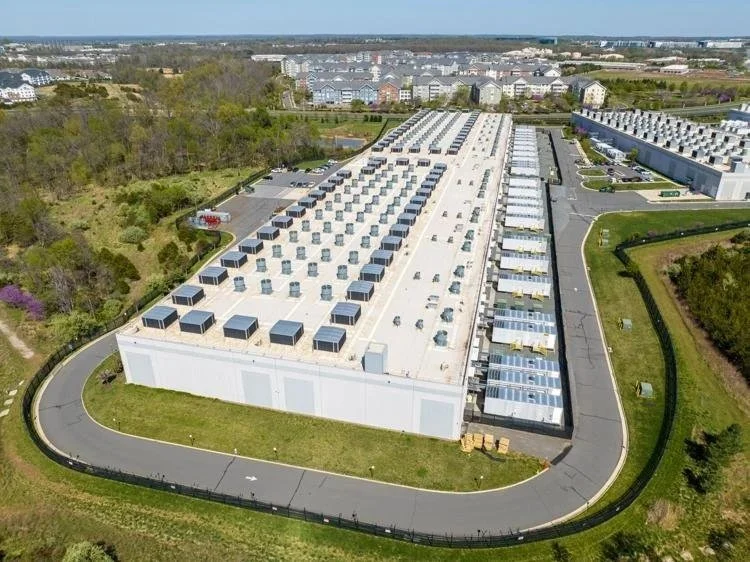
The Montgomery County Council on July 28 unanimously approved an 18-month moratorium on large-scale data centers.

None can be approved, and no applications for data centers can be processed during the moratorium and before the County develops zoning rules regulating them.

The measure encompasses the proposal by a company called Atmosphere to build a 110-acre, 5-building data center campus in Dickerson.

The Council also adopted a definition of “large-scale” or “hyperscale” data centers to clarify the kind of facility it seeks to stop for now.

The 18-month pause is intended to allow the Council and other County officials to thoroughly evaluate the risks posed by large data centers, and to draft regulations that will specify where they can be built and what rules they have to abide by.

There’s tension in that space already. Atmosphere released an updated plan and analysis of its proposal on July 20. The company is saying it will likely be unable to meet certain desires and requests from County lawmakers and advocacy groups. And the company’s CEO, Chuck McBride, told media outlets he was “disappointed” in the Council’s approval of the moratorium.

“Throughout this process, we worked collaboratively with the Council and other stakeholders to demonstrate that the Dickerson Data Center Campus is a unique redevelopment opportunity and to develop what we believe would be one of the most sustainable data center campuses possible,” McBride told The Banner.

The company had filed an appeal against a previous 6-month administrative moratorium imposed by County Executive Marc Elrich, asserting he had overstepped his authority. A similar suit against the Council’s measure would almost certainly be unsuccessful. Notably, the company has threatened numerous times since January to abandon the project if a moratorium was imposed.

Per the company’s July 20 project analysis, some County officials and advocacy groups would like to see aggressive efforts to use cleaner renewable energy to power the proposed facility. The company is asserting, however, that the mix of power sources for the Dickerson data center will not be able to meet “unrealistic” renewable energy goals—due to restraints inherent in the power grid in the mid-Atlantic area.

Issues around water use (from the Potomac River), noise, the role of the facility’s diesel generators, taxation, and other challenges also need addressing. The company claims it is striving to achieve “best practices” in these areas. But no independent assessment of its plans has yet been done.

The moratorium is a clear victory for County residents’ advocacy. On June 16, some 80 people testified at a public hearing on the issue; the vast majority supported a moratorium. Hundreds of other citizens have submitted written comments in recent months, also overwhelmingly supporting a moratorium.

Montgomery County, with this action, becomes the latest jurisdiction in Maryland and nationally to place pauses on data centers approvals.

The reasons are now quite straightforward: lawmakers and citizens alike are just beginning to understand this complex technology and its significant scope and potential impact (positive and negative) on communities.

Many jurisdictions, including Montgomery County, now realize they must involve independent experts to help assess data center proposals.

The 18-month pause means that the present Council and the next Council—as well as a new County Executive—will be dealing with this issue.

Both the new Council and County Executive assume office at noon on Monday, December 7. Importantly, re-elected Councilmember Marilyn Balcombe will be Council President in 2027 and provide an important bridge and leadership on data centers. She has been the lead person to date drafting the data center zoning ordinance.

Read More
SCA Candidate Forums: Video & Candidate Position Summaries

SCA Candidate Forums: Video & Candidate Position Summary

May 20, 2026

Watch the Democratic Candidate Forum

A recording of the April 23, 2026 Democratic Candidate Forum is available here. We thank the participating Democratic candidates — Mithun Bangeree, Andrew Friedson, Evan Glass, Peter James, and Will Jawando — for sharing their priorities, experience, and vision for Montgomery County.

We also thank the Republican candidates — Shelley Skolnick and Ester Wells — who participated in the separate Republican Candidate Forum held on May 7, 2026. See photos below.

We are also grateful to the Montgomery County Farm Bureau for co-sponsoring these events.

SCA hosted two forums for Montgomery County Executive candidates at Clarksburg High School. The forum for five Democrat candidates on April 23 attracted approximately 70 people. The two Republican candidates presented their positions to an audience of around 25 people on May 7.

The focus of both sessions was farm policy, the Ag Reserve (AR), land use, and zoning in the up-county. Discussion of the county’s trash incinerator and the proposal for a data center in Dickerson was prominent. Attendees submitted their questions for candidates online prior to the event.

SCA, as a 501(c)(3) organization, does not endorse candidates for office. The purpose of the sessions was to facilitate public awareness of all the candidates and their positions on issues pertinent to the AR and rural areas of the county.

Notably, all the candidates expressed strong support for preserving and protecting the Ag Reserve—the nearly one-third of Montgomery County zoned for farmland preservation, low-density development, and open space. But different paths to supporting the AR against looming threats were presented. Indeed, some of the candidates didn’t seem to have a strong grasp of those threats. The debate over allowing non-farm related activities on farms that remove good quality farmland out of crop and food production is one such example.

The candidates were supportive of closing the Dickerson trash incinerator—a goal SCA has pursued for more than a decade. But the candidates had differences of opinion about the best path to achieve that goal even as the county seeks to transform and upgrade its trash management systems (including a transition from burning non-recyclable trash to trucking it to environmentally sound landfills).

The candidates were aware of the proposal to create a large-scale data center campus in Dickerson, on an existing industrial site. None expressed outright opposition to the proposal. But positions varied on how the county should evaluate the idea and in what timeframe, and how the County Council should proceed in its task to write rules to govern where data centers can be built and what environmental and safety protections should apply to them. One Democrat candidate has proposed a six-month moratorium on any approvals for data centers. Another Democrat has proposed a 2-year moratorium.

Both those measures will be taken up in the Council soon. SCA supports a six-month moratorium but only if the law encompasses the Dickerson proposal. An early version of the six-month moratorium lacked clarity on whether it applied to the Dickerson proposal.

Read More
Immediate Closure of Montgomery County’s Aging Trash Incinerator Demanded Following Disclosure of Additional Dioxin Leak

Immediate Closure of Montgomery County’s Aging Trash Incinerator Demanded Following Disclosure of Additional Dioxin Leak

FOR IMMEDIATE RELEASE
February 26, 2026

Printable/PDF Version

Media Contact:
Lauren Greenberger
Vice President, Sugarloaf Citizens Association
lgreenberger@hotmail.com

Immediate Closure of Montgomery County’s Aging Trash Incinerator Demanded Following Disclosure of Additional Dioxin Leak

DICKERSON, Md.— Following our February 20, 2026, press release on the topic, Sugarloaf Citizens Association received notification that a second and more hazardous dioxin and furan discharge occurred at the Montgomery County waste incinerator in Dickerson, MD.

The Montgomery County Department of Environmental Protection has released two statements about this leak: Feb 20, 2026 and Dec 17, 2025. The most recent test results show Unit 3 total dioxins and furans discharged averaged 54.8 ng/dscm at 7% oxygen, exceeding the limit of 30 ng/dscm at 7% oxygen.

This discharge is nearly double the allowable limit and 30 times greater than the average annual stack test results (2.6ng/dscm) for the past 3 years, according to data reported on the County website. There are no established safe limits for dioxin emissions. We are not aware of any similar testing done yet on the third operating boiler, Unit 1.

The incinerator, operated by Reworld, is currently the endpoint for all the county’s non-recyclable solid waste.

Given this updated and highly concerning test result, Sugarloaf Citizen Association urgently calls on Montgomery County leadership to act:

  1. We ask the County Executive and his Department of Environmental Protection for immediate closure of the waste incinerator as a response to this emergency and temporarily haul the county’s trash by truck to an interim landfill site.

  2. We ask Montgomery County Council members to approve the County Executive’s FY27 budget that will include permanently shuttering the incinerator, ending toxic ash dumping on a community in Virginia, hauling what we can't recycle to a well-vetted landfill, and initiating robust food-scrap composting, and other well-studied waste reduction strategies.

Read More
Dioxin Leak at Dickerson Incinerator Prompts Call for Closure

Dioxin Leak at Dickerson Incinerator Prompts Call for Closure

FOR IMMEDIATE RELEASE
February 20, 2026

Printable/PDF Version

Media Contact:
Lauren Greenberger
Vice President, Sugarloaf Citizens Association
lgreenberger@hotmail.com

Dioxin Leak Adds Urgency to Shuttering Montgomery County’s Aging Trash Incinerator

DICKERSON, Md. — Alarmed by reports of a recent massive dioxin leak at the aging Montgomery County trash incinerator in Dickerson, MD, Sugarloaf Citizens Association (SCA) urges the Montgomery County Council to move forward expeditiously with plans to end trash burning and haul the county’s waste to vetted landfills outside the County.

The incinerator, operated by Reworld, is currently the endpoint for all the county’s non-recyclable solid waste.

In November 2025, a report by the county’s Department of Environmental Protection (DEP) revealed that the incinerator was emitting nearly double the permitted limit—and 21 times more dioxin and furans than the last test in 2024.  There is no safe emissions limit established for these toxic chemicals.

The dioxin leak from the 30-year-old incinerator comes amid longstanding concerns about health hazards to the community and local agriculture associated with trash incineration, which also produces other toxic chemical emissions such as mercury, sulfur dioxide, arsenic, beryllium, lead, nitrogen oxides and fine particulate matter into the region’s air.

“Further delay by DEP or the County Council is unacceptable,” says Lauren Greenberger, SCA vice president. “We have advocated for an alternative to incineration for more than a decade, given the incinerator’s profile as the worst single source of air pollution and greenhouse gases in Montgomery County. This recent leak is yet more evidence that this aging facility is a continuing dire public health threat.”

Reworld estimated in 2025 that it would cost from $50 million to $100 million to keep the facility operating safely and efficiently for another 7 to 10 years. More recently, DEP cited potential costs as high as $365 million in that timeframe. Most trash incinerators are decommissioned after approximately 22 to 27 years of use.  

Read More
Welcome to the new Royce Hanson Conservation Park in Dickerson

Welcome to the new Royce Hanson Conservation Park in Dickerson

October 14, 2025

Kudos to Montgomery County, the Montgomery County Parks Foundation, and an advocacy group of County residents for creating the Royce Hanson Conservation Park at Broad Run.

This new 475-acre park at 21765 Club Hollow Road in Dickerson will celebrate farming and the Ag Reserve—through educational programs, interpretation of the area’s rich agricultural history, and the enjoyment of nature.

With trails and recreational opportunities for hikers, cyclists, and equestrians, there’s something for everyone.

Most important, the new park celebrates Dr. Royce Hanson—a true visionary—and the County policymakers that worked with him to create the Ag Reserve in 1980.

Born in Depression-era Oklahoma, Dr. Hanson grew up to become an academic, a public servant, author, urban planner, conservationist, and advocate for farming, wilderness, and outdoor recreation. He served two terms as Chairman of the Montgomery County Planning Board, first from 1972 to 1981, and again from 2006 to 2010. From 2009 to 2022, Dr. Hanson served on the Board of the Montgomery County Parks Foundation.

Thanks to his and the County’s commitment, the Ag Reserve—comprising a third of the county—has become a national model of agricultural preservation in a densely populated area.

The Montgomery Parks Foundation has launched a $100,000 fundraising campaign to enhance the park’s facilities and educational programming. You can donate via the Foundation’s website.

Read More
Our Position on Solar Energy in Montgomery County and Maryland

Our Position on Solar Energy in Montgomery County and Maryland

Updated: July 18, 2025

Note: The Summer 2025 issue of PLENTY magazine features an article by SCA President Steven Findlay on the new state solar law, which went into effect July 1. The piece explores how the legislation evolved, what it does, and the debate surrounding it.

Click here to view/download the full article.

Below is an updated web post on this issue. Details on the new law—which are complex—can be found in the PLENTY piece and are not addressed in this post.

A new state law—The Renewable Energy Certainty Act—went into effect on July 1. It aims to significantly expand solar energy generation in Maryland. It does that by:

  • Streamlining regulations for the assessment of proposed ground-based solar facilities

  • Giving solar companies easier access to farmland—around 120,000 acres throughout the state, and

  • Preventing counties from denying permits for utility-scale solar projects.

We’ll now see how the law affects the solar industry—whether it prompts a flood or just a trickle of new proposals. We’ll see how the state’s Public Service Commission (PSC), which is charged with reviewing solar proposals, adapts its process to the new law. We’ll see how easily the state’s energy companies and regulators accommodate new solar proposals—that is, accept them for addition to the grid, and in what timeframe. And, finally, we’ll see just how many landowners/farmers in the Ag Reserve are interested in converting some of their land from agriculture to solar energy generation.

Before the law passed the legislature in April, no certainty existed around the scope of landowner interest, beyond the anecdotal and a few projects already in process.

Joined by Montgomery Countryside Alliance (MCA), the Montgomery Farm Bureau (MFB), and Montgomery Agricultural Producers (MAP), SCA will be closely tracking implementation of the law and solar proposals in the Ag Reserve and Montgomery County.

The state’s Department of Agriculture is due to release a fact sheet and Q&A on the law soon. We’ll share those with you when we get them.

Solar companies continue to contact landowners in and near the Ag Reserve, offering to evaluate their land for possible solar development. Neither state nor county officials appear to be tracking those offers. Landowners have reported solar offers that would net them 10 to 20 times more money than leasing to a farmer.

That issue and the concept of converting historically agricultural land to non-farm use triggered fierce opposition to the new law in some quarters. SCA shared that concern and fought to amend the bill.

Our main concern: the law appears to create a “slippery slope” that could undermine the ag economy and Ag Reserve over time. But just how steep that slippery slope might be depends on many factors—not the least of which is how the entities that regulate energy supply react.

The most important of those entities is PJM Interconnection. PJM is responsible for operating the wholesale energy market in 13 states and Washington, DC, including Maryland. For years, PJM has told state lawmakers and regulators that it was “backlogged” on solar projects—because such projects had proliferated. Will that backlog now change under the new law and amid rising energy demand? It’s not clear.

Read More
Read Article: Maryland county may spend $57 million on incinerator it wants to close

Read Article: Maryland county may spend $57 million on incinerator it wants to close

Updated June 4, 2025

In case you missed it, an article published in The Washington Post on Monday June 2 covers machinations around the Dickerson incinerator. SCA is quoted. Read the full article: Maryland county may spend $57 million on incinerator it wants to close. For those who may not have access to The Washington Post, click here to read a PDF of the full article.

Read More
Trash Burning No Longer Considered “Renewable Energy” in Maryland

Trash Burning No Longer Considered “Renewable Energy” in Maryland

April 10, 2025

Maryland lawmakers enacted legislation on April 7 ending Maryland’s classification of trash incineration as “renewable energy.”

It’s been considered that since 2011, as part of the state’s “renewable portfolio standard” program. As such, the energy generated in “waste-to-energy” (or “refuse-derived fuel) facilities, such as the one in Dickerson, was treated the same as energy produced by solar and wind facilities. That included subsidies to help promote renewable energy sources.

Thus, incinerators effectively took money out of the pockets of solar, wind and other clean energy companies—even as incinerators polluted the air and generated greenhouse gases. Since 2011, Maryland consumers have supported the Dickerson incinerator to the tune of around $30 million.

The new law is a huge win for environmental, civic and energy justice groups—includingSCA—which have been pushing this outcome for years.

Maryland is now the second state, after California, to delete trash incineration from its renewable energy portfolio.

“It’s about time,” said Lauren Greenberger, SCA’s vice president and main advocate on the issue. “It’s been such a ‘waste’ of money—pun intended—and has helped prop up the remaining incinerators in the state, which are too old, inefficient, and produce dirty energy.”

Added Jennifer Kunze, Maryland Program Director with Clean Water Action: “This action will help support the development of zero waste infrastructure by making it easier for composting, reuse and recycling, and other healthier solid waste management practices to compete without fighting uphill against state subsidies supporting the worst solid waste management option.”

Read More
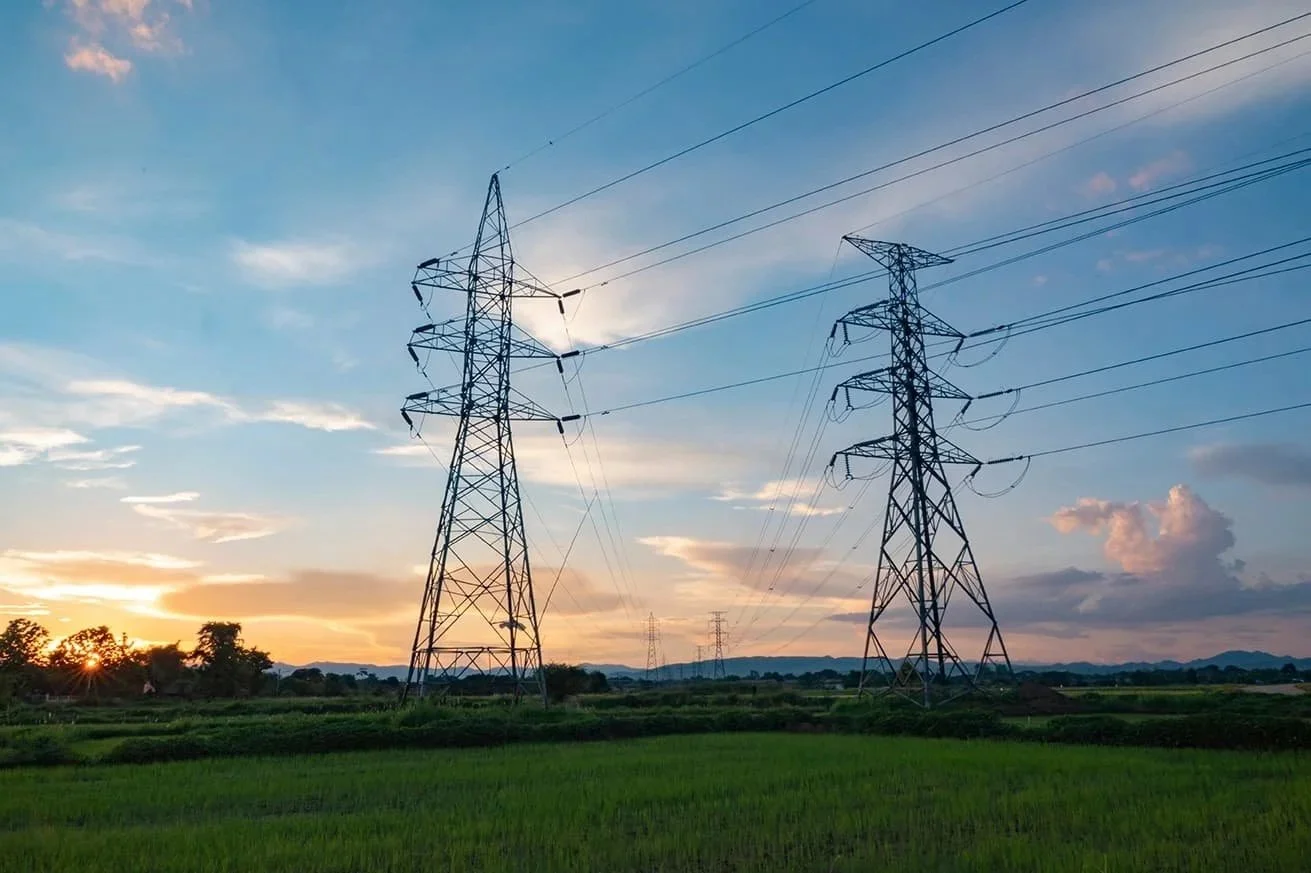
Power Line Project is a Bad Idea

Power Line Project is a Bad Idea

December 5, 2024

A proposed high-energy power line extending 70 miles from the Baltimore area to Adamstown would threaten an estimated 4,000 acres of farmland, forests and wildlife habitats. It would also require permanent easements on dozens of farms and private properties to site hundreds of 140-foot-tall transmission towers.

SCA joins the Baltimore, Carroll and Frederick County governments, the Maryland Farm Bureau, Preservation Maryland, the Chesapeake Bay Foundation, and a host of regional environmental in opposition to the project. Maryland Gov. Wes Moore said in late November he had “grave concerns” about the project but has not yet opposed it.

We urge you to learn more online and at StopMPRP.com. MPRP stands for Maryland Piedmont Reliability Project.

Power lines are, of course, a necessary fixture of modern life. When they are justified, we support them and live with the eyesore. But the necessity of this one has been widely questioned. It will mainly provide power to the burgeoning data center industry in Virginia, and not Maryland homes and businesses. But Marylanders will help pay the estimated $424 million cost of the project.

The project also relies on outdated infrastructure. Experts consulted by StopMPRP say more sustainable and efficient alternatives are available.

There are larger issues at play, too. Maryland lacks a coherent long-term energy strategy that takes the environment, the well-being of residents, and climate change into consideration—even as demand for energy is expected to rise sharply over the next decade.

Read More
County Enhances Food Compost Effort

County Enhances Food Compost Effort

November 15, 2024

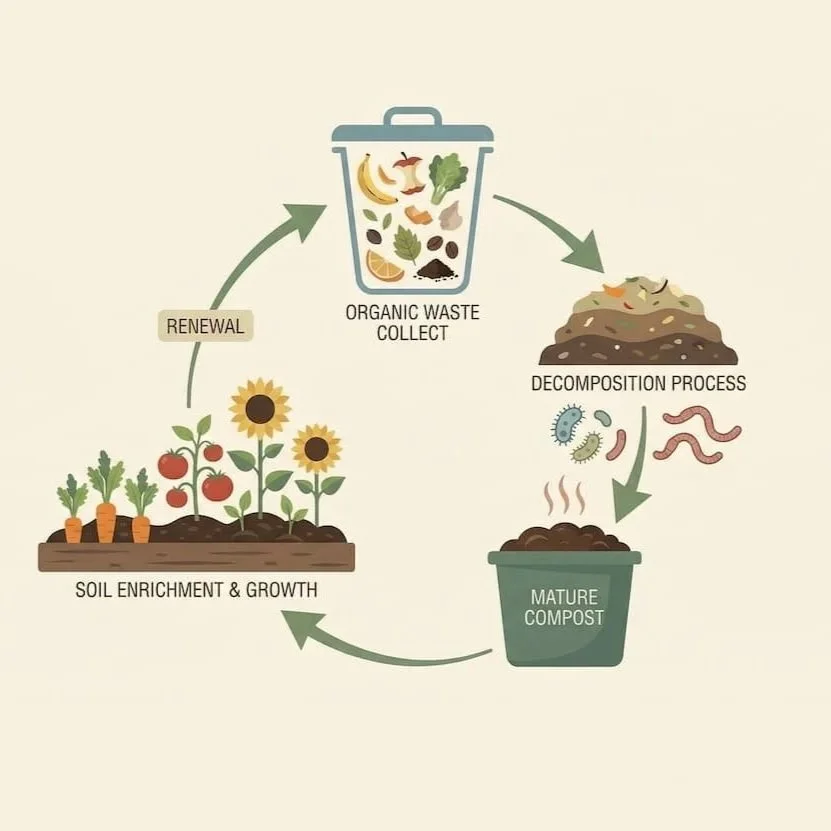
This month, Montgomery County launched the latest phase of its initiative to reduce food waste by encouraging businesses and residents to compost instead of discarding food scraps in the trash. (See a short video later in this article.)

Food scraps account for about one-quarter of the county's total trash volume. In 2023, the county estimates that approximately 90,000 tons of food waste ended up in the trash, most of which was incinerated at the county's facility in Dickerson.

Composting food scraps is an environmentally beneficial practice (and thus, a no-brainer), but it requires significant changes in behavior for households and businesses, as well as adaptations to the county’s waste management systems. The county has been running a pilot composting program for several years and now plans to increase participation and enhance its infrastructure.

Part of this effort includes allowing residents to “recycle” food scraps at the curbside, just as they do with glass, plastic, paper, and cardboard. The collected scraps would be transported to a central location, likely the Dickerson yard trim compost facility.

Click “Read More” to go to the full article and watch a short YouTube video of the County’s recent ceremony on the composting initiative.

Read More
Montgomery County's Sole Source Aquifer — The Good Gift

Montgomery County's Sole Source Aquifer - The Good Gift

January 9, 2024

This article is excerpted from the Spring 2024 issue of Plenty Magazine.  We present the initial portion of the article. You may then link to Plenty’s website to read the remainder of the piece, and see the charts and photos that accompany it.

“Our aquifer is the bloodstream for all farmers in the Agricultural Reserve. It’s what sustains us.”
Gene Kingsbury, Kingsbury’s Orchard

More often than not, when asked, folks in the D.C. metro region do not really have a fix on where the water that flows from their faucets comes from. Sure, residents and businesses know that they pay Washington Suburban Sanitary Commission (WSSC) for their water and sewage service, and they may know that the origin of their water is the mighty Potomac River. But as to the details—filtration plant operations, the infrastructure that delivers the water from plants to homes and businesses, what happens when there is prolonged drought, these bits are hardly known.

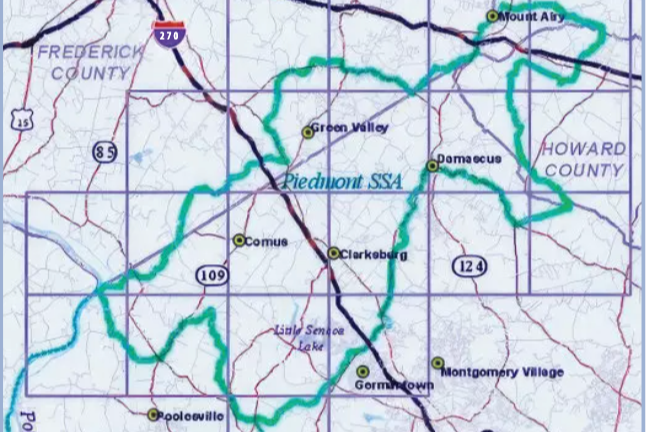
More mysterious to many is where roughly 25-30,000 homes, businesses and farm enterprises get their water from in the nearly one-third of Montgomery County that is wholly outside the WSSC service area by design. nd that if the story I aim to share in two parts.

Read More